Skip to content
Innovation PODs

One senior team, one outcome, about 12 weeks

An Innovation POD is a small, principal-led team that works inside your environment and is accountable for a production outcome, not hours. Six PODs — Databricks, Snowflake, Kafka, Flink, GenAI and Insurance — each starting from our own InsightLake products.

66
AI products
50+
Enterprise clients
10+
Years delivering
3
Clouds: AWS, Azure, GCP
What a POD is

A small team that owns the result

An Innovation POD is a small, senior team that is accountable for one production outcome — a migration cut over, a domain live on a new platform, an agent in use by a first team — not for hours billed.

It works inside your environment: your cloud accounts, your IAM, your data. It starts from our own InsightLake products so the first weeks are not spent on plumbing, and it leaves behind a system your engineers can run.

The model has been refined over more than ten years of delivery for 50+ enterprise clients, across AWS, Azure and Google Cloud.

A POD is

  • Accountable for an outcome agreed in week 1
  • Principal-led, with senior engineers only
  • Shown in a demo of working software every week
  • Built on products we already run in production
  • Designed to hand over: your team co-builds from week 2

A POD is not

  • Staff augmentation filling a seat by the hour
  • A pyramid of juniors behind one senior name
  • A strategy deck with no running system
  • A platform that only we can operate
  • A black box outside your security boundary
Lead

Principal engineer or architect

Owns the architecture, the outcome and the weekly demo.

Build

2–6 senior engineers

Platform, data, streaming, ML or domain specialists, named in the proposal.

Your side

Owners from your team

Co-build from week 2 so the system has owners when the POD leaves.

The 12-week model

The same four phases, every POD

Each POD page shows what fills these weeks for that platform. The rhythm and the gates are the same.

Week 1

Discovery

What the POD does
  • Agree the outcome and how it will be measured
  • Map data, systems, access and constraints
  • Name the POD team
What you have at the end
  • An outcome statement the sponsor signs
  • Scope, in and out
  • A fixed proposal
Weeks 2–4

Foundation

What the POD does
  • Stand up the environment behind your IAM
  • Connect the production read path to the data
  • Build the tests or evaluation harness before the system
What you have at the end
  • A thin end-to-end system
  • The first test or evaluation report
  • A backlog ranked by impact on the outcome
Weeks 5–10

Build & iterate

What the POD does
  • Build in weekly increments against the outcome
  • Security, observability and audit from the first sprint
  • Harden in the last sprints instead of adding features
What you have at the end
  • A demo every week
  • Measured progress on the outcome
  • Security review evidence
Weeks 11–12

Production & handover

What the POD does
  • Go live with a first set of users or workloads
  • Runbooks, alerts and escalation paths
  • Knowledge transfer to each team involved
What you have at the end
  • A system in production
  • Runbooks and tests wired into your CI
  • Optional run-the-system tier

Every week: a demo of working software against the outcome metric. Every two weeks: a steering review. No status decks.

The six PODs

Six PODs, one way of working

Four platform PODs, one AI POD and one industry POD. Each page shows who it is for, the week-by-week plan, a reference architecture and the products it starts from.

Lakehouse

Databricks POD

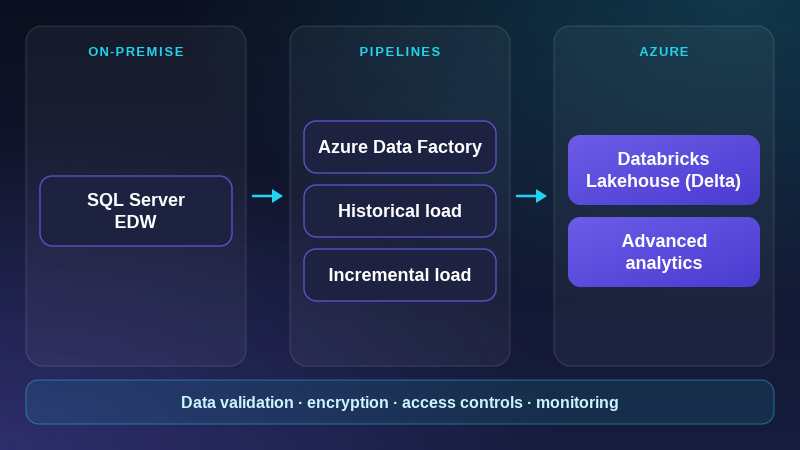
A governed lakehouse on Databricks: Unity Catalog, medallion pipelines, serving and MLflow.

  • Warehouse, Hadoop and Unity Catalog migrations
  • A first domain in production
  • Governance and cost control as code
12 weeks typical4–6 people
Explore the Databricks POD
Data cloud

Snowflake POD

A governed, cost-controlled Snowflake account with a first domain modelled and served.

  • Migrations with reconciliation
  • Roles, masking and row access as code
  • Credits sized and attributed per workload
12 weeks typical3–5 people
Explore the Snowflake POD
Streaming platform

Kafka POD

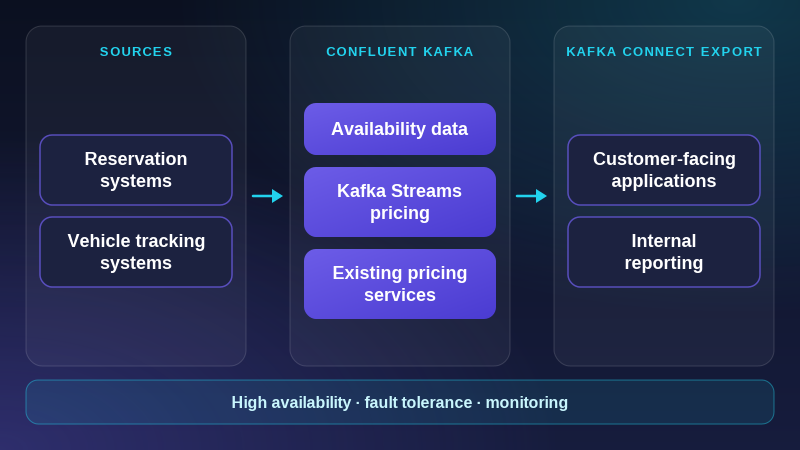
Assess, migrate, build or harden Kafka on Confluent, Amazon MSK, Redpanda or Apache Kafka.

  • Migrations one pipeline at a time
  • A shared platform run as code
  • Security, monitoring and DR
8–16 weeks typical3–6 people
Explore the Kafka POD
Stream processing

Flink POD

Apache Flink jobs that are correct, fast and operable: event time, state, checkpoints and Kubernetes.

  • New real-time pipelines
  • Slow or failing jobs fixed
  • Flink as a platform on Kubernetes
12 weeks typical3–5 people
Explore the Flink POD
AI

GenAI POD

A production copilot, knowledge base or agent workflow on your data, with evaluation and guardrails.

  • Built on the InsightWorker harness
  • Evaluation in CI before go-live
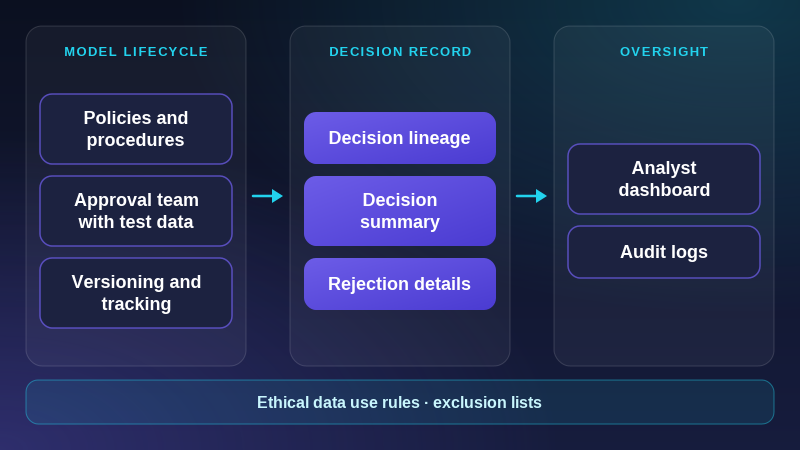
  • Agents under governance
12 weeks typical4–6 people
Explore the GenAI POD
Industry

Insurance POD

Underwriting, claims or ceded reinsurance on the Insurance Suite, one line of business at a time.

  • Submission to bind, FNOL to close, ceded
  • Agents prepare, people decide
  • Integrated with your core systems
10–14 weeks per line typical4–8 people
Explore the Insurance POD

Need something else? We also compose PODs for cloud migration, FinOps, data security and app modernization, and PODs often combine: Kafka with Flink, Databricks with GenAI.

How engagement works

From first call to handover

Four steps, three ways to buy, and where a POD fits next to the alternatives.

  1. Talk to a principal

    A 30-minute call about the outcome, the systems involved and the constraints. No sales deck.

  2. One-week discovery

    Paid and short on purpose. It ends with an outcome statement, a scope and a fixed proposal naming the team.

  3. The POD runs

    Inside your environment: daily stand-ups, a demo of working software every week, a steering review every two weeks.

  4. Handover or run

    Runbooks, code and knowledge transfer at week 12, or an optional run-the-system tier if you want us on call.

Predictable

Fixed-outcome POD

One price for the outcome and the sprint. Best for approved budgets and clear scope.

Flexible

POD on time and materials

Pay for the team week by week. Best when scope will evolve or one POD spans several use cases.

Always-on

Innovation credits

A pre-purchased pool of POD capacity drawn on across the year. Best for an ongoing portfolio.

Where a POD fits

QuestionInnovation PODStaff augmentationTraditional fixed-bid project
Accountable forAn outcome metricHoursA scope document
TeamPrincipal-led, seniorVaries by seatOften a pyramid
Starts fromInsightLake products already in productionYour toolsVendor playbooks
Progress shown byA weekly demo of working softwareTimesheetsMilestone reports
Knowledge transferDesigned in from week 2IncidentalOften at the end
Best forA new capability in productionFilling a known gapA well-defined replatform
Proof and reading

Outcomes from POD engagements

A selection from the case-study library, and the playbooks the PODs work from.

Playbooks and field guides

FAQ

Questions about Innovation PODs

How is a POD different from staff augmentation?

A POD is accountable for an outcome, not hours. It is a senior, pre-formed team that brings our products as accelerators and shows progress against a real metric in a demo every week.

Where does the POD work?

Inside your environment: your cloud accounts, your IAM, your data. Our products are deployed behind your boundary, so nothing leaves it.

What if scope changes mid-sprint?

Weekly demos surface drift early. Scope is re-baselined at the steering review; fixed-outcome PODs carry a change-control budget and time-and-materials PODs flex naturally.

Do we get the code?

Yes. All custom code is yours. InsightLake products ship under their own licences, optionally deployed in your environment.

What is the smallest way to start?

A one-week discovery that ends with a fixed proposal. A full POD typically runs 12 weeks; individual PODs range from 8 to 16 depending on scope.

Can the POD run the system after launch?

Yes. An optional run-the-system tier provides on-call support, objectives and continuous improvement against your outcome metric while your team builds capability.

Can PODs be combined?

Yes, and they often are: Kafka with Flink for streaming, Databricks or Snowflake with GenAI for agents on governed data, and the Insurance POD with any of them.

Start here

Scope an Innovation POD

Tell us the outcome you want and the constraints you are working with. We will come back with which POD fits and how we would run it.

  1. We reply within one business day

    A principal reads your note and comes back with questions, not a brochure.

  2. A 30-minute scoping call

    The outcome, the systems involved, the constraints, and who on your side will own the result.

  3. A one-week discovery

    It ends with an outcome statement, a scope and a fixed proposal naming the POD team.

Prefer email? contact@verticalserve.com. VerticalServe works from Millburn, New Jersey and Pune, India.

Tell us about the outcome

Goes to the same team as the contact page.